
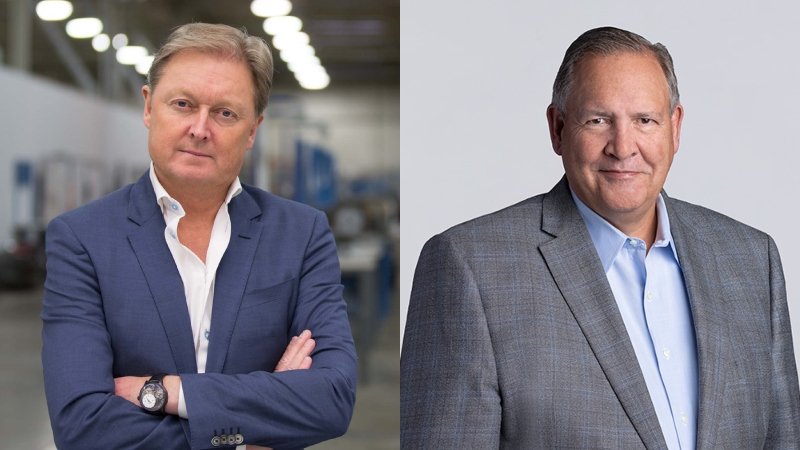
Henrik Fisker and Greg Hayes are prominent business leaders from two different fields. Henrik Fisker is famous for automotive design and electric vehicles. Greg Hayes is known for aerospace, defense, industrial management, and corporate governance.
When readers see both names together in an online search, they may wonder whether the two have a company partnership or a shared business deal. However, available reliable information does not confirm any major direct connection between them.
The best way to compare these two leaders is to understand their industries, leadership styles, achievements, and business challenges. Henrik Fisker represents creative product vision, while Greg Hayes represents the leadership needed to manage and restructure large industrial organizations.
This story is not just about the biographies of a designer and an executive. It also raises two different business questions. First, how can an attractive and innovative product reach real customers? Second, how can a huge industrial group be focused, restructured, and managed responsibly?
Both the automotive and aerospace industries require large investments. They need skilled workers, advanced technology, suppliers, testing, regulations, and long-term funding to develop products. Comparing these careers helps readers understand the relationship between innovation and execution.
Are Henrik Fisker and Greg Hayes Connected?
There is no publicly confirmed, well-documented joint venture, direct partnership, or shared company role between Henrik Fisker and Greg Hayes.
Henrik Fisker is connected to car design and EV entrepreneurship. Greg Hayes has been associated with industrial and corporate organizations such as United Technologies, RTX, Phillips 66, and BD.
Therefore, “Henrik Fisker and Greg Hayes” is a comparison search topic, not a story about a direct relationship. Their common point is business leadership, but their work environments, products, and decision-making challenges have been different.
Why Do People Search for Both Names Together?
One possible reason for this search is that both leaders are connected to modern industries and advanced technology. Henrik Fisker focused on electric vehicles and car design. Greg Hayes led large-scale strategies in aerospace, defense, and industrial businesses.
However, having technology or industry in common does not prove a direct partnership. The real value of studying them together comes from their differences. Fisker’s question was how to bring an exciting electric vehicle to market. Hayes’s question was how to make complex industrial businesses profitable, focused, and well-managed.
This difference explains an important business idea: innovation and execution are related, but they are not the same. Product design can attract attention. Manufacturing, finance, service, and governance turn that attention into a long-term business.
Who Is Henrik Fisker?
Henrik Fisker is a Danish automotive designer and entrepreneur. His name is closely connected to luxury car design and electric-vehicle startups.
He held important roles in the automotive design industry. His design career is linked to luxury brands such as BMW and Aston Martin. His work on models such as the BMW Z8, Aston Martin DB9, and V8 Vantage helped build his reputation.
Fisker’s approach was not limited to seeing a car as a way to travel. He focused on a vehicle’s shape, experience, materials, and emotional appeal. This helped make his name stand out among car designers.
Building a reputation in design and running a complete car company are two different responsibilities. A designer must focus on styling and user experience. A founder must also manage hiring, suppliers, funding, regulations, production targets, and customer support. Henrik Fisker’s journey clearly shows the difficult move between these two roles.
Fisker Coachbuild and Automotive Entrepreneurship
After building his design career, Henrik Fisker tried to turn his creative vision into a business. Through Fisker Coachbuild, he focused on customized and luxury vehicle design.
This step was important because it showed that Fisker did not want to remain only a company employee or designer. He wanted control over his own brand, product direction, and customer experience.
Entrepreneurship requires turning a creative idea into a market-ready product. This process involves managing funding, manufacturing, supply chains, regulations, and sales along with design. These challenges can be very complex in the automotive industry.
A car startup founder must maintain both customer excitement and investor confidence. A prototype or concept vehicle can attract attention, but a production vehicle must pass safety tests and software checks. It also needs a reliable parts supply, warranty support, and delivery system. This gap often becomes the most difficult part for creative founders.
Henrik Fisker’s professional identity shows this challenge. His strengths were design, brand image, and product ambition. However, building a company also required him to make decisions in areas where finance, operations, and industrial management mattered more than design training.
Fisker Automotive and Its First Business Challenge
Henrik Fisker was a co-founder of Fisker Automotive. The company gained attention with the Karma luxury hybrid car. However, it faced financial and operational problems.
Fisker Automotive filed for bankruptcy in 2013. According to Reuters, the company faced serious problems after the global financial crisis, battery supplier issues, and a recall related to the Karma sedan.
This was a difficult chapter in Henrik Fisker’s career. However, he did not completely leave the automotive industry. A few years later, he returned to the electric-vehicle field.
Understanding this chapter only as a failure would give an incomplete picture. Fisker Automotive showed that premium design and cleaner powertrains could attract customers. At the same time, the company’s experience showed that good engineering does not guarantee commercial success without reliable suppliers and enough financial support.
Fisker Inc. and the Ocean Electric SUV
Henrik Fisker established Fisker Inc. in 2016. The company focused on electric vehicles, and the Fisker Ocean electric SUV became its main product.
Fisker Inc. promoted the idea of an asset-light business model. Under this model, the company could rely on external partners for some parts of manufacturing. The goal was to control development and production costs.
The company went public through a merger with a blank-check company in 2020. According to Reuters, the listing provided cash that the company used to try to increase Ocean SUV production and deliveries.
The Ocean’s design and driving range were attractive features for customers. However, competition in the electric-vehicle industry was very strong. Along with vehicle production, software quality, service networks, parts availability, and customer support were also important.
This example helps explain the difference between a product’s promise and its operating reality. A car’s design can attract customers in a showroom, but the ownership experience also depends on software updates, reliable systems, spare parts, and service response. This is why an automotive startup needs strong systems even after launching its product.
The Ocean’s story also explains the wider pressure in the EV market. Electric-vehicle companies must manage battery costs, charging expectations, software development, safety rules, and competition at the same time. Established automakers usually have existing factories, dealers, and service networks. Startups must build or outsource these systems.
An asset-light model can reduce some costs, but it can also make a company more dependent on external partners. If problems arise with manufacturing, quality control, or delivery schedules, the customer experience may fall outside the company’s direct control. This is a general business observation, not a claim that one decision caused every problem.
Fisker Inc. Bankruptcy and the Business Lesson
Fisker Group Inc. started a Chapter 11 bankruptcy case on June 17, 2024. Fisker Inc. and its other U.S. subsidiaries filed related Chapter 11 cases on June 19, 2024. These details are documented in the company’s SEC filing.
Reuters reported that the company faced cash pressure while trying to increase Ocean SUV production. The report also mentioned vehicle software and hardware problems, funding challenges, and sales difficulties.
Chapter 11 means a company can pursue restructuring or an asset-sale process under court supervision. In simple words, it is a process that can help a business reorganize or protect itself. It does not automatically prove fraud or criminal wrongdoing.
Fisker Inc.’s case offers a clear lesson for entrepreneurs: strong design and an exciting product are important, but long-term success also requires manufacturing, quality control, after-sales service, funding, and proper timing.
Who Is Greg Hayes?
Gregory J. Hayes is an American business executive. His career has been connected to aerospace, defense, finance, corporate strategy, and industrial management.
Hayes spent about 21 years at United Technologies Corporation, or UTC. He held senior roles related to finance and business development. He also served as UTC’s chief financial officer from 2008 to 2014.
In 2014, Hayes became UTC’s CEO. He also took on the role of chairman in 2016. This career path shows that his expertise focused more on large-scale operations, finance, and corporate planning than on creative product design.
Greg Hayes’s career is different from the usual founder story. Instead of becoming the public face of a single consumer product, he became a leader of large systems and institutions. His finance background helped him closely understand capital allocation, business performance, and risk. Later, his responsibilities expanded to strategy and corporate development.
A CEO’s job at a large company is not only to increase revenue. The CEO must decide which businesses should continue receiving investment, which assets should be sold, which mergers could be useful, and which risks need to be explained to the board. Hayes’s public career record is connected to these types of decisions.
From United Technologies to RTX
One of the most important chapters in Greg Hayes’s career is connected to UTC’s transformation and its merger with Raytheon.
As UTC’s CEO, Hayes tried to reshape the company. According to Phillips 66’s governance profile, UTC sold Sikorsky Aircraft, acquired Rockwell Collins, and separated Otis Elevator and Carrier into independent companies in 2020.
In 2020, UTC’s aerospace businesses, Pratt & Whitney and Collins Aerospace, merged with Raytheon Company. This merger created RTX Corporation. According to RTX’s official profile, Hayes played an important role in its formation.
This transaction was an example of major corporate restructuring. It involved managing multiple businesses, employees, technologies, customers, and legal systems under a new corporate structure.
This part of Hayes’s story shows that corporate leadership sometimes means focusing a company instead of expanding it. Divestitures, spin-offs, and mergers are difficult decisions, but they can help give a business a clearer direction.
The order of events is important when understanding UTC’s transformation. The company first separated some businesses, strengthened certain aerospace capabilities, and then merged with Raytheon to create a focused aerospace and defense company. These decisions require leaders to manage financial goals along with the expectations of employees, customers, regulators, and shareholders.
The creation of RTX was not just a name change. After the merger, the businesses also needed to align their operations, combine reporting structures, review technology portfolios, and work with different corporate cultures. This makes Hayes’s career a useful example of corporate integration and transformation.
Greg Hayes at RTX
Hayes served as the CEO and chairman of RTX. RTX is a major aerospace and defense company that works in areas such as aircraft engines, aerospace systems, and defense technologies.
According to RTX’s official biography, Hayes joined its board in 2020, became board chairman in 2021, and started serving as executive chairman when his CEO tenure ended in 2024.
According to BD’s profile, his role as RTX executive chairman continued until April 2025. He also served as a special advisor to the RTX CEO until January 2, 2026.
It is important to present this timeline carefully. Calling Greg Hayes the current RTX CEO would not be accurate. His current public board roles include serving as a BD director and Lead Independent Director at Phillips 66.
Greg Hayes’s Board Roles
Greg Hayes is a board director at Becton, Dickinson and Company. BD is a global medical technology company, and Hayes joined its board in 2025.
According to Phillips 66, Hayes serves as its Lead Independent Director. He also chairs the nominating and governance committee and serves on some other board committees.
Board roles do not require someone to manage a company’s daily operations. A director’s job is to monitor strategy, risk, executive oversight, governance, and shareholder interests.
Hayes’s current board work shows another side of his leadership. Even after leaving a CEO role, experienced executives can use their knowledge in corporate governance. His experience may be useful in areas such as finance, operations, risk, and executive oversight at medical technology and energy companies. However, this does not mean he personally manages their daily business operations.
Similarities Between Henrik Fisker and Greg Hayes
These two leaders have different backgrounds, but they also share some common points.
Both Are Connected to Industrial Products
Henrik Fisker worked on vehicle design and development. Greg Hayes led companies connected to aircraft engines, aerospace systems, and defense businesses. Both worked with real-world products and complex supply chains.
Both Took Major Business Risks
Fisker chose high-risk entrepreneurship by launching electric-vehicle startups. Hayes led major mergers, acquisitions, divestitures, and corporate restructuring.
Neither Relied Only on Individual Talent
Turning car design into production and delivering it to customers requires teamwork. In the same way, managing an aerospace corporation requires working with engineers, finance teams, regulators, suppliers, and board members.
Both Faced Pressure From Long-Term Decisions
For Fisker, the challenge was funding vehicle programs for years and taking them into production. For Hayes, it was managing mergers, divestitures, and changes across large organizations. In both cases, the results of decisions cannot be measured in just one meeting or one quarter.
Trust Matters in Both Industries
Car buyers trust a vehicle’s safety, software, and service. Aerospace and defense customers expect reliability, compliance, and long-term support. The more complex a product or institution becomes, the more important it is to maintain trust.
Differences Between Henrik Fisker and Greg Hayes
Industry
Fisker is connected to automotive design and EV startups. Hayes is connected to aerospace, defense, industrial strategy, and governance.
Leadership Style
Fisker’s public identity is that of a creative founder and product visionary. Hayes is known as a finance-focused corporate leader and restructuring executive.
Business Scale
Fisker worked around startups and individual vehicle programs. Hayes led large public companies, major mergers, and organizations with tens of thousands of employees.
Main Challenge
Fisker’s major challenge was turning product design into reliable mass production and a sustainable business. Hayes’s main challenge was focusing complex industrial businesses and carrying out major corporate changes.
Quick Comparison Table
| Point | Henrik Fisker | Greg Hayes |
|---|---|---|
| Nationality | Danish | American |
| Main field | Automotive design and EV entrepreneurship | Aerospace, defense, and corporate leadership |
| Known for | BMW and Aston Martin design work, Fisker companies, and Ocean SUV | UTC leadership, RTX formation, and board governance |
| Earlier company challenge | Fisker Automotive bankruptcy in 2013 | Large-scale corporate restructuring and merger execution |
| Later business event | Fisker Inc. Chapter 11 filings in 2024 | RTX executive chairman role ended in 2025; later board and advisory work |
| Publicly documented current context | Former founder and public face of Fisker companies; no current operating role is assumed here | BD director and Phillips 66 Lead Independent Director |
| Direct connection | No major confirmed partnership with Hayes | No major confirmed partnership with Fisker |
| Leadership identity | Creative founder and designer | Corporate operator and governance leader |
Have Henrik Fisker and Greg Hayes Ever Worked Together?
The reliable sources reviewed for this article do not confirm any major joint project, board relationship, investment partnership, or shared company role between them.
Comparing them in one article is useful because of their different leadership styles, not because they held similar job titles. Henrik Fisker represents product vision and entrepreneurial risk. Greg Hayes represents industrial scale, financial planning, and governance.
It would only be accurate to claim a connection between them if an official record or reliable report confirms such a partnership in the future.
What Can We Learn From Henrik Fisker and Greg Hayes?
Henrik Fisker’s journey shows that design innovation can create market attention. However, turning that attention into a dependable product, service, and financial model is equally important.
Greg Hayes’s journey shows that growth alone is not enough for leading a large company. A business must also focus its portfolio, separate weaker areas, integrate acquisitions, and maintain strong governance.
Both examples offer a simple business lesson: a company needs both ideas and execution. A creative product can struggle without strong operations. In the same way, strong operations can have limited value without a useful product vision.
Fisker’s story highlights the importance of product-market fit, cash planning, and customer support. Hayes’s story explains the value of portfolio decisions, merger planning, and accountability. These lessons are useful not only for automotive and aerospace companies but also for growing businesses in other industries.
FAQs
Who Is Henrik Fisker?
Henrik Fisker is a Danish automotive designer and entrepreneur. He is known for luxury car design and his founder roles at Fisker Automotive and Fisker Inc.
Who Is Greg Hayes?
Greg Hayes is an American business executive. He is a former CEO and chairman of United Technologies and RTX. He is also a director at BD and the Lead Independent Director at Phillips 66.
Are Henrik Fisker and Greg Hayes Related?
There is no publicly documented, confirmed family relationship between them.
Have Henrik Fisker and Greg Hayes Worked Together?
The sources reviewed do not confirm any major joint venture, partnership, or shared business role between them.
Which Cars Is Henrik Fisker Associated With?
His name is commonly associated with design work on the BMW Z8 and luxury models from Aston Martin. This article focuses on his verified career direction rather than providing a complete list of every design credit.
What Happened to Fisker Automotive?
Fisker Automotive filed for bankruptcy in 2013. The company faced challenges after financial problems, battery supplier issues, and a recall involving its Karma hybrid sedan.
When Did Fisker Inc. File for Bankruptcy?
Fisker Group Inc. started its Chapter 11 case on June 17, 2024. Fisker Inc. and related U.S. subsidiaries filed related cases on June 19, 2024.
How Did Greg Hayes Help Create RTX?
Hayes was UTC’s CEO when its aerospace businesses, Pratt & Whitney and Collins Aerospace, merged with Raytheon in 2020. This merger created RTX.
Is Greg Hayes Still the CEO of RTX?
No. According to available official profiles, his RTX CEO tenure ended in April 2025. He remained a special advisor until January 2, 2026.
What Board Roles Does Greg Hayes Hold Now?
According to official company profiles, he serves as a board director at BD and as Lead Independent Director at Phillips 66.
What Is the Biggest Difference Between Henrik Fisker and Greg Hayes?
Henrik Fisker is connected to creative automotive design and startup entrepreneurship. Greg Hayes is connected to large aerospace and defense businesses, corporate restructuring, and governance.
Conclusion
The reason to compare Henrik Fisker and Greg Hayes is not a confirmed partnership. Their importance comes from their different leadership paths.
Henrik Fisker started with luxury car design and later launched EV startups. His story shows the difficult balance between innovation, ambition, and automotive execution. The bankruptcy events involving Fisker Automotive and Fisker Inc. also show how important stable funding, quality control, and reliable operations are alongside an exciting product.
Greg Hayes built his career through finance and corporate strategy before leading large industrial organizations such as UTC and RTX. His career is an example of mergers, business restructuring, aerospace leadership, and board governance.
In short, Fisker represents product vision and entrepreneurial risk, while Hayes represents corporate execution, scale, and governance. Their stories are different, but comparing them makes one thing clear: successful industrial businesses need creativity as well as disciplined execution.

Writer & Editor, UnderstandingBlogs
Luke David is a Writer & Editor at UnderstandingBlogs. He creates clear, research-based content on technology, AI, business, entertainment, and public figures. His work focuses on accurate facts, simple explanations, and useful insights readers can trust. Every article is carefully reviewed and fact-checked before publication.
- Henrik Fisker and Greg Hayes: A Comparison of Automotive Design and Corporate Leadership - November 7, 2026
- Jessica Chastain and Mike Krieger: Are They Connected? Age, Career and Net Worth - November 5, 2026
- RobTheCoins About: A Simple Guide for Beginners - November 3, 2026


