
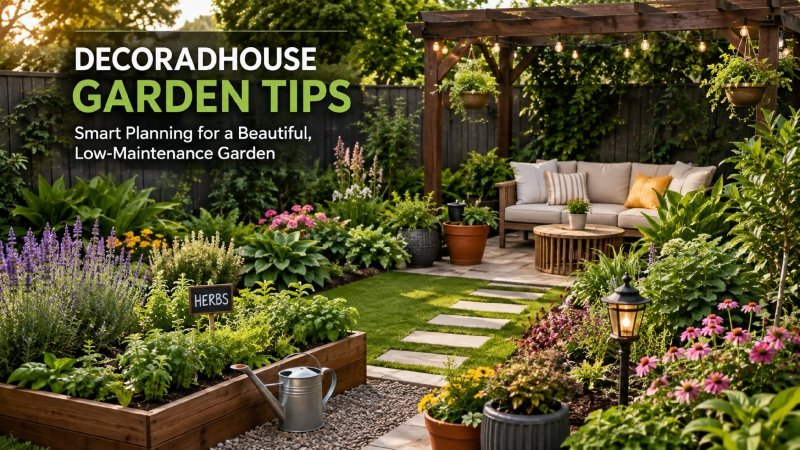
A great garden doesn’t need a big budget or a professional landscaper. It needs a clear plan, a few smart choices, and a layout that actually fits how you live. This collection of decoradhouse garden tips by decoratoradvice focuses on exactly that: practical planning, plant selection, and low-maintenance design that holds up season after season, rather than generic advice like “just add more flowers.”
Start With a Plan, Not a Plant List
Most garden mistakes happen before a single seed goes into the ground; they happen at the planning stage. Before buying anything, take time to study your space:
- Track sunlight patterns. Watch which areas get full sun, partial shade, and full shade throughout the day. This single factor determines more plant success or failure than almost anything else.
- Map foot traffic. Notice where you naturally walk most often, and where guests tend to pause. Paths and seating should follow these natural patterns, not fight against them.
- Sketch before you dig. Even a rough drawing dividing the space into a seating area, a planting zone, and a walking path prevents the common mistake of placing everything randomly and reworking it later.
This upfront planning step is what separates a garden that looks good for one season from one that stays functional and attractive year-round.
Zone Your Garden Into Purposeful Sections
Rather than treating your yard as one flat, undivided space, break it into smaller zones with distinct purposes:
- A seating or reading corner, placed where it catches soft morning light rather than harsh afternoon sun
- A planting zone, grouped by water needs so you’re not overwatering some plants while underwatering others
- A kitchen herb patch, positioned near a direct path from the house for easy access while cooking
- A pollinator-friendly corner, using flowering plants that attract bees and butterflies
This zoning approach works especially well in small yards, where treating the whole space as separate “mini-scenes” makes it feel larger and more intentional than one open, undefined patch of green.
Choose Plants Based on Climate, Not Just Appearance
One of the most common garden planning mistakes is choosing plants purely for how they look in a catalog photo, without checking whether they actually suit the local climate.
- Know your climate zone first. Check whether your area tends to be hot and dry, cool and wet, or somewhere in between; most gardening centers and extension offices can help identify this.
- Match plants to conditions. Drought-tolerant plants (succulents, lavender, ornamental grasses) suit dry regions, while moisture-loving plants (ferns, hostas, hydrangeas) do better in consistently damp climates.
- Mix perennials and seasonal plants. Perennials provide year-round structure and reduce how much replanting you need to do annually, while seasonal bloomers add rotating bursts of color through spring, summer, and fall.
Choosing plants this way for fit rather than looks alone leads to healthier growth with noticeably less ongoing effort.
Get Watering Right
Water is one of the easiest things to get wrong in a garden too much or too little can both cause real damage.
- Group plants by water needs. Mixing high-water and low-water plants in the same bed makes it almost impossible to water both correctly.
- Water early in the morning. This reduces evaporation loss and gives plants time to absorb moisture before the heat of the day.
- Consider drip irrigation for larger beds. It delivers water directly to the root zone, wasting far less than overhead sprinklers.
- Mulch around your plants. A layer of organic mulch conserves soil moisture, suppresses weeds, and slowly improves soil quality as it breaks down.
Build Soil Health From the Ground Up
Even the most carefully chosen plants will struggle in poor soil. A few practical steps improve soil over time without much extra work:
- Add organic compost to improve structure and nutrient content, especially in sandy or clay-heavy soil.
- Avoid over-tilling, which can disrupt beneficial soil organisms and break down natural soil structure.
- Test your soil periodically if plants seem to be struggling despite good care; a simple pH test can reveal whether the soil itself is the issue.
Choose Furniture and Lighting That Actually Get Used
A garden isn’t just plants; how you furnish and light it determines whether you’ll actually spend time in it.
Furniture
- Lightweight, foldable furniture (folding chairs, movable benches) works particularly well in small yards, since it can be rearranged based on the activity.
- Choose weather-resistant materials treated wood, metal, or synthetic wicker so furniture holds up without constant maintenance.
Lighting
- Combine ambient, task, and accent lighting to add depth rather than relying on one bright overhead source.
- Soft lighting near seating areas encourages relaxation, while brighter path lighting improves safety and visibility after dark.
Keep Maintenance Manageable
A beautiful garden shouldn’t require constant, exhausting upkeep. A few habits make long-term maintenance much easier:
- Mulch consistently to reduce weeding and watering frequency.
- Choose more perennials than annuals if low-maintenance is a priority, since perennials return year after year without replanting.
- Use potted plants in small spaces, which are easier to rearrange, replace, or move as conditions change.
- Prune and deadhead regularly in small sessions rather than letting overgrowth build up into a bigger task later.
A Simple Starting Checklist
If you’re beginning from scratch, this order tends to work well:
- Observe sunlight and foot traffic patterns for at least a few days
- Sketch a rough zone layout (seating, planting, paths)
- Test or improve your soil
- Choose plants suited to your specific climate and light conditions
- Set up an efficient watering approach (drip irrigation or scheduled morning watering)
- Add furniture and lighting last, once the layout is settled
Frequently Asked Questions
What’s the most important first step in garden planning?
Observing sunlight and foot traffic patterns before choosing plants or furniture. Skipping this step is the most common reason gardens end up needing rework later.
Do I need a large budget to create a good garden?
No. A clear plan, plants matched to your climate, and a few smart layout choices matter far more than how much you spend on decor or furniture.
How do I make my garden low-maintenance?
Prioritize perennials over annuals, mulch consistently, group plants by water needs, and use drip irrigation where possible to reduce ongoing effort.
What’s the best way to water a garden efficiently?
Water early in the morning to reduce evaporation, and consider drip irrigation for larger beds so water reaches the roots directly instead of being lost to runoff or evaporation.
Can small gardens use the same zoning approach as large ones?
Yes. In fact, zoning tends to help small gardens more, since dividing the space into distinct mini-areas (seating, herbs, planting) makes it feel larger and more organized than treating it as one flat space.
Conclusion
Creating a garden that stays beautiful and manageable doesn’t require expert-level skills or a big budget. Following these decoradhouse garden tips by decoratoradvice starting with a real plan, zoning your space with purpose, matching plants to your actual climate, and keeping long-term maintenance in mind from the start builds a garden that looks good and stays that way well beyond the first season. Start small, apply one or two changes at a time, and let the space develop naturally from there.

Writer & Editor, UnderstandingBlogs
Luke David is a Writer & Editor at UnderstandingBlogs. He creates clear, research-based content on technology, AI, business, entertainment, and public figures. His work focuses on accurate facts, simple explanations, and useful insights readers can trust. Every article is carefully reviewed and fact-checked before publication.